

Water Hierarchy: The Distribution and Management of Water in the Body
- KAZ KOBAYASHI
- 2024年5月10日
- 読了時間: 1分

"Welcome to the 'Initial Knowledge Acquisition' at GYM CONQUER Blog! Here, we simplify complex topics to spark your curiosity and guide you towards further learning. Approach scientific and medical information with a critical mind—question, understand, and expand your knowledge. Let this be a stepping stone to a richer life."
Water is an essential element for our bodies and is distributed according to specific priorities within. In this blog, we explore the management of bodily fluids and the purpose and methods of "water cutting."
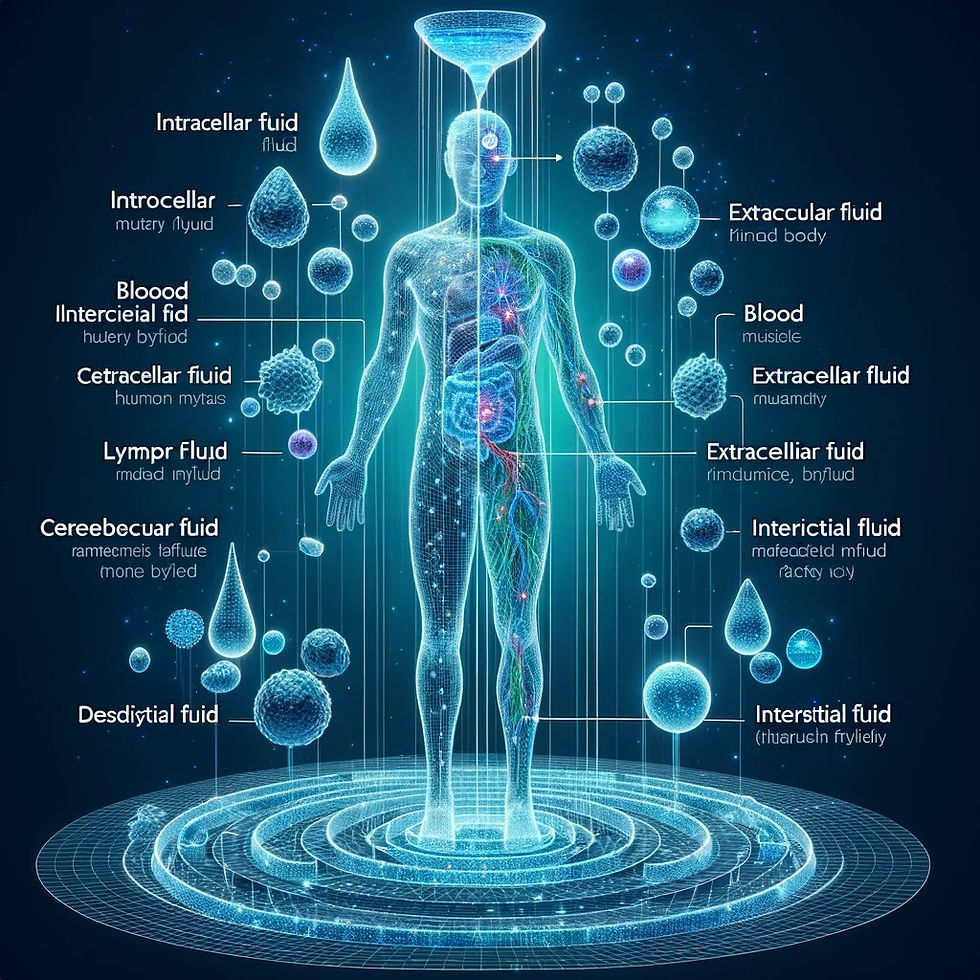
Distribution of Water in the Body
Water in the body is primarily divided into intracellular fluid (about two-thirds of the total) and extracellular fluid (about one-third remaining). The extracellular fluid is further divided into cerebrospinal fluid, lymph, blood, and interstitial fluid. Interstitial fluid, in particular, is the first to decrease during dehydration because it is considered less critical.
The Vital Role of Fluids
Cerebrospinal and lymphatic fluids are extremely important for sustaining life, and blood is essential for transporting nutrients and oxygen. These fluids form the foundation of life support, and their balance directly impacts health status.
Edema and Water Cutting
Edema occurs when there is an increase in interstitial fluid. On the other hand, effective water management within the body can be optimized through water cutting, which primarily focuses on reducing the amount of interstitial fluid. Proper hydration and mineral regulation can safely facilitate water cutting.
Practicing More Effective Water Cutting
For better appearance in competitions, more precise water management is required. Improving muscle definition and visibility of veins involves maintaining appropriate levels of water in the intracellular fluid and blood while effectively controlling unnecessary water retention.